More than a decade after their loved ones’ remains were reburied without formal identification, Yazidi families await the answers needed to bring them home.
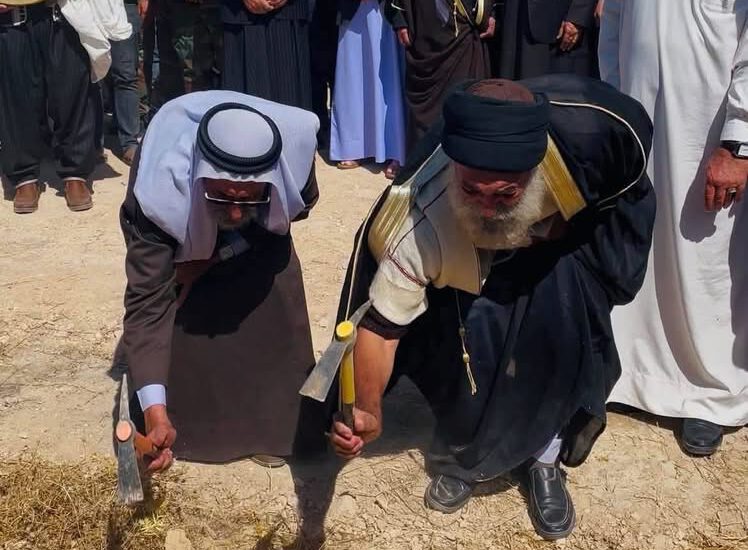
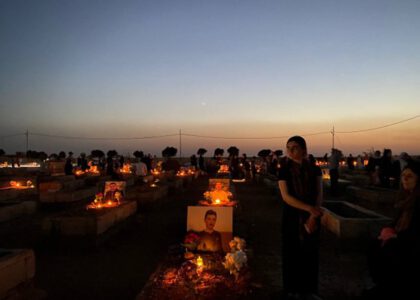
On 20 September 2026, a ceremony attended by victims’ families marked the beginning of the reopening of the burial site at the Sharaf al-Din Shrine in northern Sinjar. The operation seeks to recover and identify the remains of Yazidis killed by ISIS, advancing a process that families have sought for more than eleven years.
The remains were originally recovered from mass graves in Khanasor and Bardiya by Kurdistan Region authorities in 2015. They were reburied at Sharaf al-Din on 13 August that year without DNA testing or formal identification. The current operation is therefore a re-exhumation of an existing burial site, undertaken to establish the victims’ identities and enable their return to their families.
Families’ Long Wait for Answers
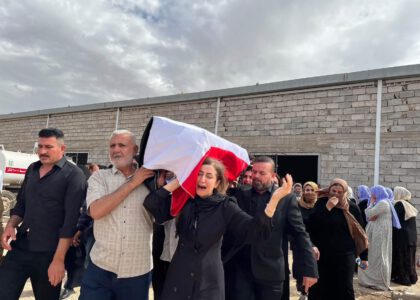
For bereaved families, knowing where remains are buried does not resolve uncertainty about whose remains they are. Formal identification matters deeply: it can establish the fate of a missing relative and enable a family to bury their loved one under their own name, according to Yazidi religious traditions.
Farida Global Organization is liaising with families and advocating for the rights of missing persons throughout this process. Khalid Salih, Country Director of Farida Global Organization, said:
> “The reopening of the Sharaf al-Din burial site is an important step for families who have waited more than eleven years for answers. But exhumation is only the beginning. Families must receive timely, respectful information throughout the forensic process, and DNA analysis must be carried out as efficiently as possible while maintaining the highest standards of accuracy, confidentiality, and dignity. These families should not be left waiting indefinitely to learn the fate of their loved ones.”
Salih attended the preparatory discussion meeting in Duhok held before the reopening of the grave. During the meeting, Farida Global Organization emphasized that it is essential to inform families of victims in a timely and respectful manner and to accelerate the DNA matching process, so that families are not left waiting another twelve years for answers.
One family member, speaking about the long wait for identification, said:
> “For more than eleven years, we have lived with uncertainty. We know that our loved ones may be in this grave, but we still do not know which remains belong to our family. We want the truth, and we want the process to move quickly and respectfully so that we can finally bring our loved ones home and bury them by name.”
The reopening follows years of requests from families and advocacy by civil society organizations. An August 2026 coordination meeting in Duhok brought together families, Yazidi organizations, the International Commission on Missing Persons (ICMP), and relevant Iraqi federal and Kurdistan Regional Government institutions to agree on a mechanism for advancing the work.
From Recovery to Identification
Iraq’s national technical team brings together specialists from the institutions responsible for mass graves, missing persons, and forensic medicine. The process involves recovering the remains and transferring them to forensic laboratories in Baghdad for examination and DNA analysis.
Exhumation is an essential stage, but it does not itself establish identity. Families must receive clear information about the stages that follow, the progress of the examination, and any requirements for family reference samples. DNA matching should be conducted as efficiently as possible, while maintaining rigorous forensic standards and protecting the confidentiality of families’ information. Expectations should be communicated carefully, without promises of identification before forensic results are confirmed.
Dignity Throughout the Process
At Farida Global Organization, we believe that families’ rights and needs must guide every stage of this work. Respectful communication, access to psychosocial support, confidentiality, and meaningful opportunities to ask questions should accompany technical procedures.
Public communication must also protect the dignity of those who were killed. Photographs and personal accounts should be shared with care and appropriate consent. Families should retain control over whether and how their experiences are made public.
Identification may answer profound questions, but it cannot erase loss. Each family must be given the space to grieve in its own way, without assumptions about when mourning ends or what recovery should look like.
A Commitment That Must Continue
Farida Global Organization stands in solidarity with the families awaiting answers and will continue liaising with them and advocating for the rights of missing persons. We call for sustained resources, effective institutional coordination, accelerated DNA matching, and transparent communication so that recovery is followed by identification and the dignified return of remains.
Families should not have to endure another twelve years of uncertainty. They deserve timely information, meaningful participation, and a process that treats their search for the truth as an urgent responsibility.
Every victim had a name, a family, and a place in the community. The responsibility now is to carry this process forward with the care, urgency, and accountability that they and their families deserve.
 English
  Deutsch