

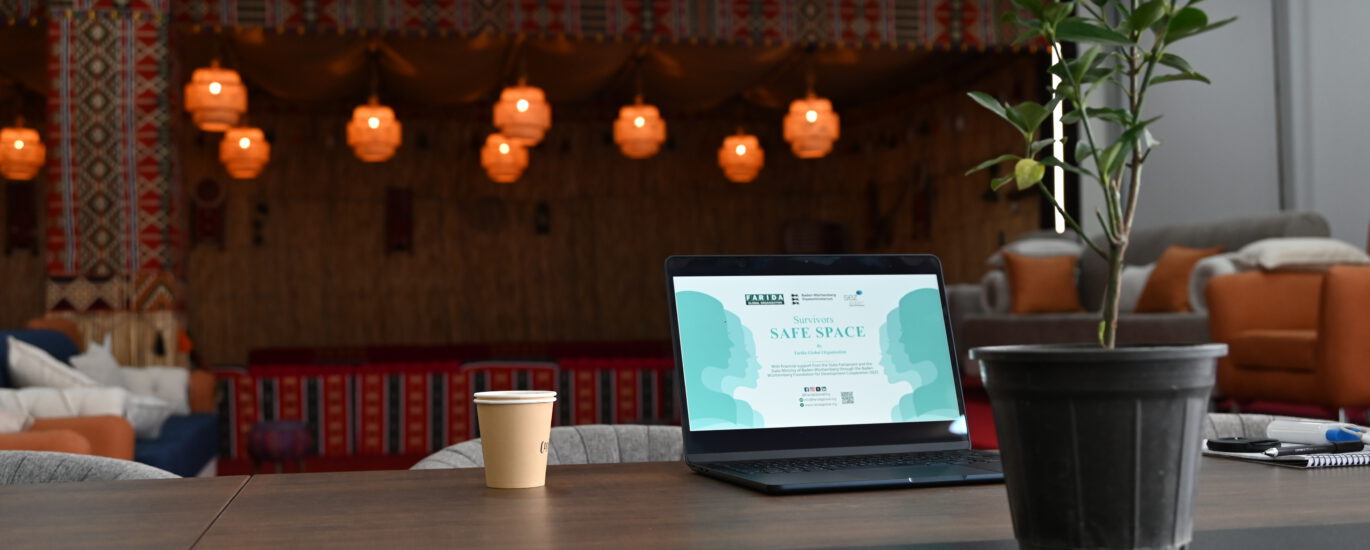
In northern Iraq, a survivor-led community space is making room for the everyday things displacement puts out of reach: learning, friendship, creativity—and a birthday worth celebrating.
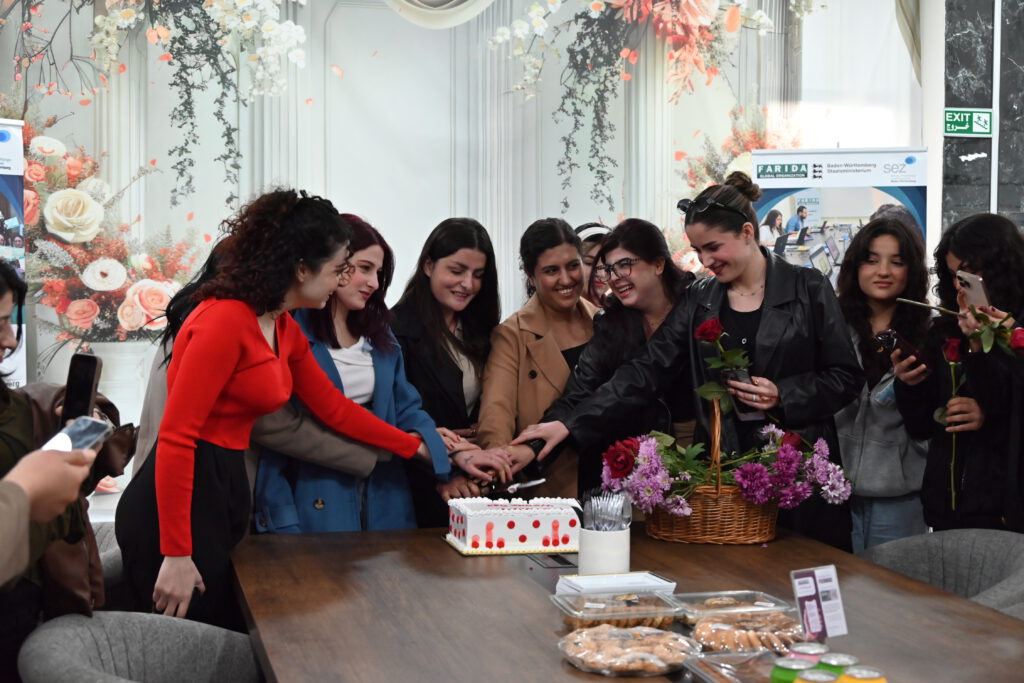
A birthday appears in a visitor logbook. Then another. By early October, 289 visits to a community space in Sharya, northern Iraq, had included a birthday celebration.
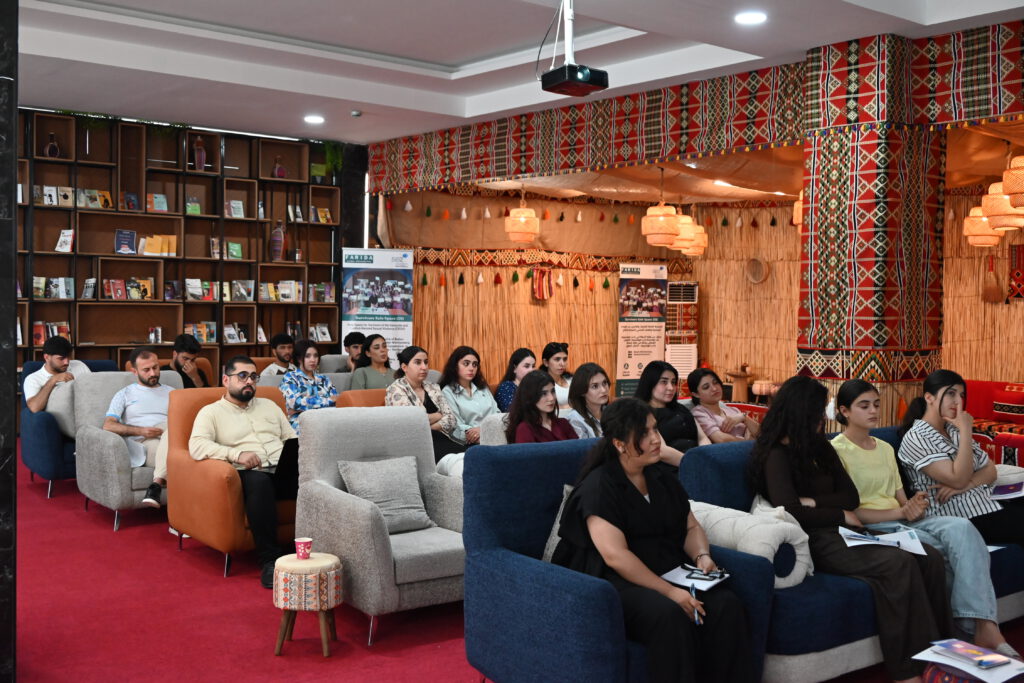
It is an unexpected detail in the story of a project created for survivors of genocide and displacement. It is also a revealing one. Alongside the urgent need for justice, support and a secure future, people need somewhere to gather. Somewhere a year passing can be marked with friends. Somewhere life has room to extend beyond what happened to them.
At the Survivor Safe Space—known as 3S—that idea has a physical home.
Established by Farida Global Organization, a survivor-founded and survivor-led organisation, the space in Sharya, Duhok, brings a question into focus: when displacement lasts for years, what does a community need to keep living, learning and looking ahead?
When a temporary shelter holds a decade of life
The project grew out of the circumstances of Yazidi families displaced by the genocide committed by the Islamic State group, also known as ISIS or Daesh, in 2014. Farida’s assessment describes families spending more than a decade in camps around Duhok, in tents intended as emergency accommodation.
A decade is a substantial part of a life. For a child, it can encompass most of the years they remember. For a young adult, it can span the transition from school to the search for work and independence. For a parent, it can mean raising a family while the prospect of a permanent home remains uncertain.
For people who survived Daesh captivity, the end of captivity leaves further questions: how to obtain support, pursue rights, reconnect with others and make decisions about the future. There is no single timetable for those journeys, and no single service that can meet every need.
3S was conceived with that complexity in mind. Its design connects community life and learning with legal and psychosocial support, creating a setting where people’s interests and aspirations have a place alongside their needs.
The reasons people come through the door
Between 27 January and 5 October 2026, the logbook records 3,326 visits across 191 days. The figure includes repeat attendance; it is not a count of distinct individuals.
The reasons entered beside those visits give the space its character. Connecting with others or exploring the centre appears in 1,576 entries. Reading or relaxing appears in 610. Birthday celebrations account for another 289. Some visits combine more than one purpose.
These are modest activities with a familiar human meaning. Reading requires somewhere to settle. Friendship needs opportunities to meet. A celebration needs room for people to be together. For communities living with prolonged displacement, places that accommodate these experiences deserve a place in the discussion about recovery.
Women and girls account for 64.5% of recorded visits, while almost half—48.6%—are by young adults aged 18 to 24. Children, older adults and people in between also appear in the register. The records describe a space used across generations, with particularly strong participation by women and young people.
A chance to learn—and something to look forward to
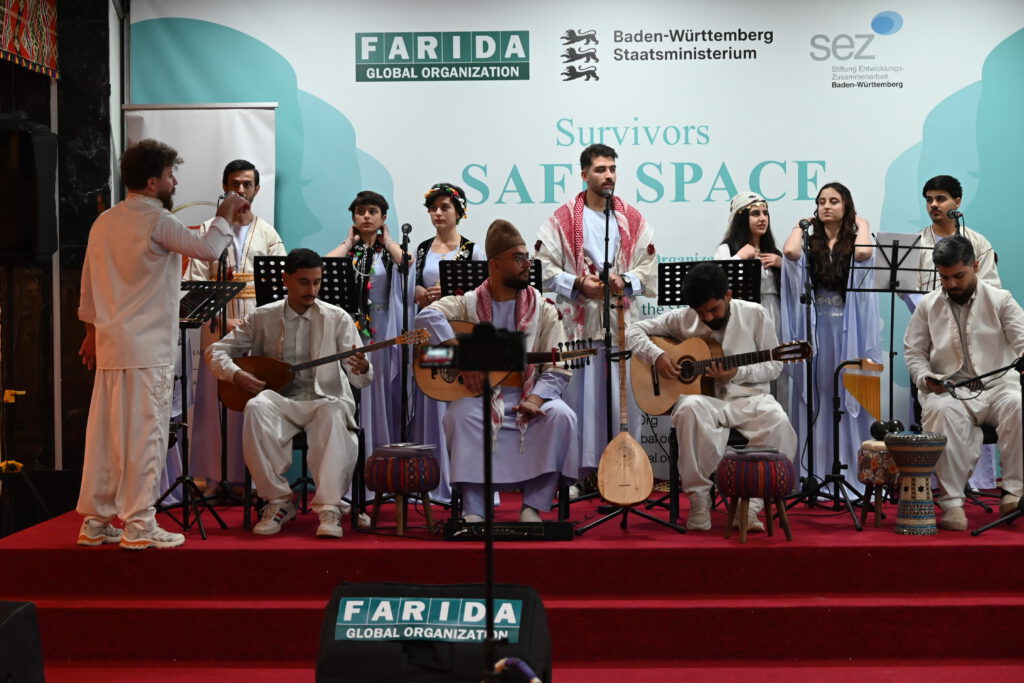
The centre’s records also show 443 workshop or training attendances on 44 days, alongside 127 event attendances on six days. Taken together, training and events were recorded on 49 distinct days. These are activity-day counts: the logbook does not identify how many separate sessions took place on each day.
Behind the figures is a practical opportunity to build on what people want to do. Written feedback mentions music, chess, reading and hands-on learning. Suggestions for the future include more training, German-language learning and additional community activities.
The art and creativity corner extends that invitation. Visitors are encouraged to draw, colour and explore their talents at their own pace. Participation can begin with curiosity; it does not require someone to turn a painful experience into a public story.
For an organisation founded and led by survivors, that freedom of choice is central. A person’s experience of violence is part of their history. Their interests, abilities and ambitions also deserve attention.
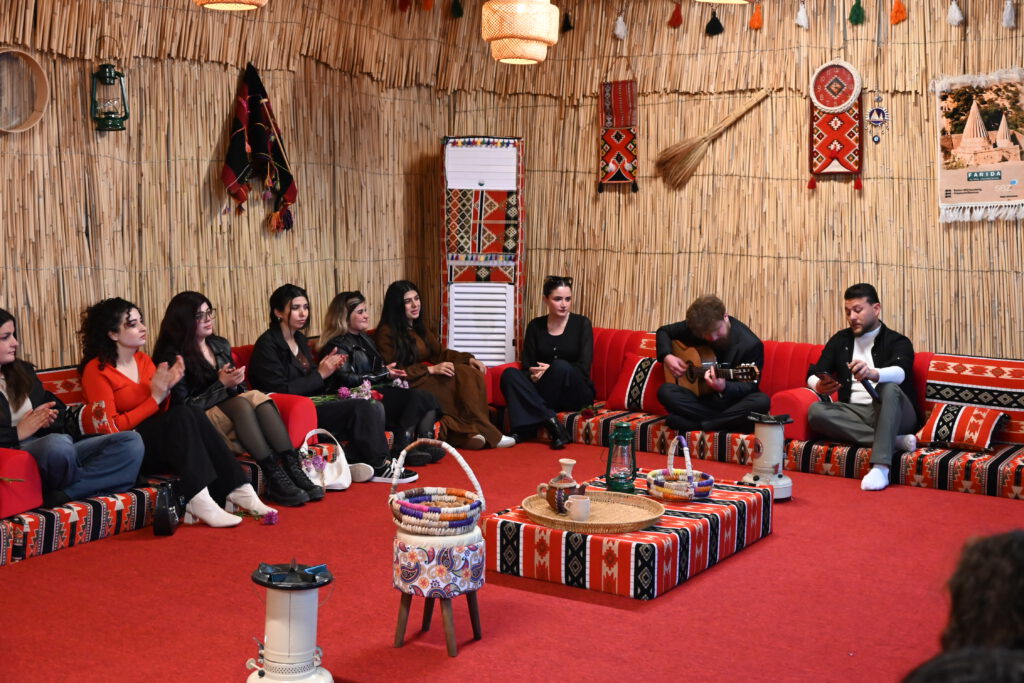
What makes a room feel welcoming?
The feedback offers some clues: quiet, cleanliness, hospitality, supportive staff and a setting that reflects Yazidi heritage.
Across 29 feedback forms submitted from March to June, all responses rated the experience as satisfied or very satisfied; 26 selected “very satisfied.” Every response also agreed or strongly agreed that the person felt safe and was treated with respect and dignity. Twenty-eight would recommend the activity to others.
The forms cover two recorded locations: 22 relate to the 3S Survivors Safe Space and seven to the Training Center at Sharya Mall. This is a small, self-selected sample, not a survey of everyone who has visited. It nevertheless offers a consistent account of a welcome respondents valued.
All five respondents who answered the skills-training questions strongly agreed that they had gained practical skills they could apply. Whether those skills lead to longer-term opportunities requires follow-up. The immediate finding is encouraging—and gives future partners a concrete question to help answer: what support will enable people to put their learning to use?
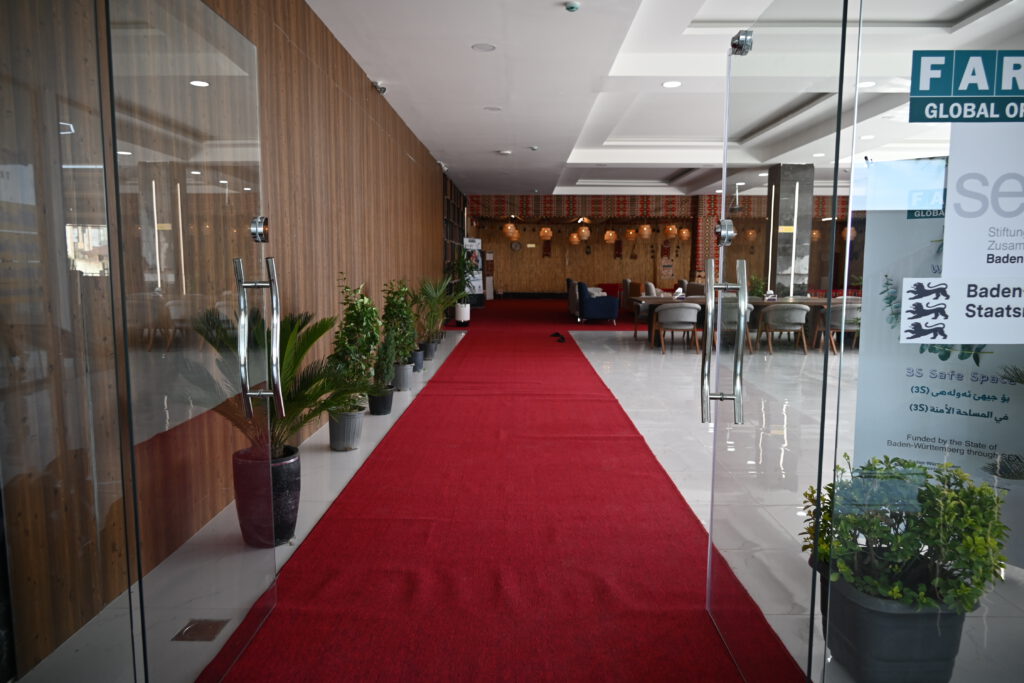
A place in the community, a connection to rights
3S also sits within Farida Global Organization’s wider commitment to justice and survivor leadership. The project’s legal-support component was designed to help survivors understand and pursue their rights, including through Iraq’s Yazidi Survivors Law, while its psychosocial component recognises the importance of appropriate support.
Bringing these strands closer to community life can make an organisation easier to approach. Someone’s first interest may be a course, a cultural activity or a place to read. A familiar setting can also offer an opportunity to ask where further assistance is available.
The visitor and feedback records do not establish legal outcomes or lasting changes in mental health. They show something more immediate: use of the space, participation in activities and positive experiences among those who chose to respond. That is a foundation on which further support and careful evaluation can build.
What it takes to keep the door open
Support from Baden-Württemberg through the Baden-Württemberg Foundation for Development Cooperation (SEZ) helped make the 3S initiative possible. Its continuing use raises a question for international partners: how can an investment in a physical space become a sustained opportunity for the community around it?
The answer involves the everyday work that makes a centre useful—staff, running costs, learning materials, appropriate services and the time to listen. It also involves connections beyond its walls: to education, livelihoods, public institutions and opportunities for survivors to influence decisions affecting their lives.
For foundations, NGOs and diplomatic partners, the records offer a practical starting point. There is documented demand for a community space, interest in more training and feedback that can guide improvements. Future collaboration can build on that evidence while supporting stronger monitoring of what changes over time.
A community space cannot resolve displacement or replace the right to a safe, lasting home. It can give people somewhere to participate in community life while those larger questions remain unresolved.
In Sharya, the logbook records courses, conversations, quiet time and birthdays. Together, they make a case for an investment whose value is easy to overlook: giving people room to live the present as they work towards a different future.
To discuss partnerships supporting 3S, contact Farida Global Organization at info@faridaglobal.org or visit www.faridaglobal.org.
With financial support from the State Parliament of Baden-Württemberg and the State Ministry of Baden-Württemberg through the Baden-Württemberg Foundation for Development Cooperation, as part of the partnership between Baden-Württemberg and northern Iraq.
The publisher is solely responsible for the content.
 English
  Deutsch